Ice Maker Repair
Ice Maker Stopped: Tracing the Water Path From Wall to Bin
Written by
Yuki Tanabe
Refrigeration technician — controls and sensors · 18 years in the trade
Tests a sensor against an independent reading rather than trusting the display it feeds. Drift is quiet, cheap to correct, and routinely mistaken for a dying compressor.
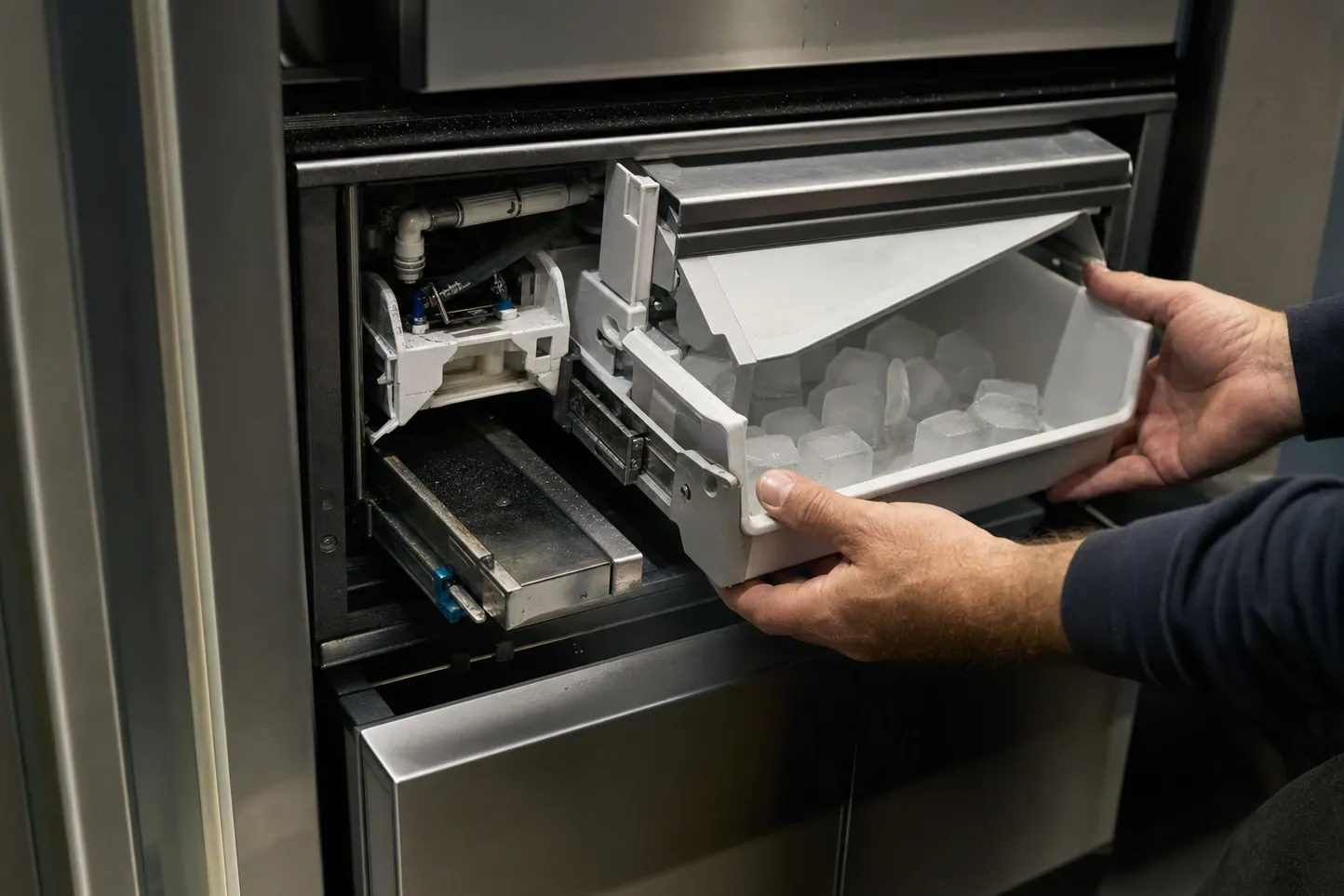
An empty bin is the one Sub-Zero complaint that almost never begins where everybody points. The module sits at the end of a chain that starts at a valve under the floor or behind the cabinet, and anything along that chain which interrupts, slows or freezes the water arriving produces the identical result: nothing to hear, and nothing to scoop.
So the useful question is not “has the ice maker failed” but “where does the water stop”. Walking the chain in order answers it, and it explains why the answer sometimes takes a day to arrive. Sub-Zero asks for twenty-four hours after a unit is switched on before ice production is judged at all, and the same patience applies after anything you change.
The compartment has to be cold enough to freeze a mould
Before the water path is worth examining, the ice maker’s working condition has to be met. Sub-Zero’s threshold is a compartment at or below 5°F, with 0°F the setting it recommends, and warm compartment temperature appears on the manufacturer’s own list of reasons a module stops producing.
That matters because a cabinet drifting upward is usually drifting for its own reasons, and the ice is simply the first thing anybody notices. A coated condenser is the classic version: the maker’s window for clearing that coil runs from six months to twelve, shorter where there are pets, and a coil untouched inside that window is worth doing before anything else is suspected. Nothing in the water path can compensate for a mould that never gets cold enough to release.
The water has to arrive, and arrive with force behind it
Two stages sit upstream of the cabinet and both are ordinary plumbing rather than appliance work. The first is the supply shut-off, which gets closed during unrelated jobs and stays closed. The second is pressure, and this is where a quiet, slow failure hides.
Every one of these modules is built around a supply that arrives steadily, and a line that has gone soft sits alongside the mechanical causes rather than below them. What you cannot do is settle it from the kitchen: there is no gauge on the appliance and no reading the front panel will give you. A plumber puts a meter on the line and comes back with a number in a few minutes. That is worth knowing before anyone sells you a valve.
Houses on the hillsides above the basin are the ones where this turns up, along with any address where a pressure regulator has aged out. The symptom is a module that works, then works badly, then stops.
Where the path freezes, jams or overfills
Inside the cabinet the failures are physical and several of them are visible.
- A jammed cube. One cube out of place in the mould or the delivery route stalls the cycle. It is the first thing on Sub-Zero’s list and the easiest to clear.
- A bin that is not seated level. The manufacturer asks specifically that the storage bin be installed properly and sitting level, because the module reads its position to know whether to keep going.
- The shut-off arm. Raised by a bag of shopping, left raised for months.
- A frozen fill tube. Water that stops halfway freezes where it stopped, and the plug it leaves blocks the next fill. This one is a cause rather than a homeowner task: clearing it safely means getting at the tube, and that is a panel job.
- A valve staying open too long. Sub-Zero lists a fill valve energised beyond about fifteen seconds among the causes, which produces the opposite picture — overfill, a slab rather than cubes, and water freezing where it should not be.
The filter, and the two things people get wrong about it
A filter change is the most common owner intervention on this chain and the most commonly half-finished. Sub-Zero’s instruction after fitting a new one is to throw away the first full bucket of ice the unit makes, because that first production run is what flushes the system and clears the air the change introduced. On units with a dispenser, the first several glasses go the same way. Skip that and the verdict on the new filter is formed from the worst water it will ever deliver.
The second mistake is fitting something extra upstream. Sub-Zero does not support or sell in-line filters and has no retrofit filtration for models built without it, and anything a plumber adds has to leave the supply inside the pressure range above. A reverse-osmosis system may be used, but the manufacturer asks for steady pressure in the upper band and says that a unit with its own internal filter should have that filter bypassed when it runs on reverse osmosis.
What is left for a visit, and what it costs to find out
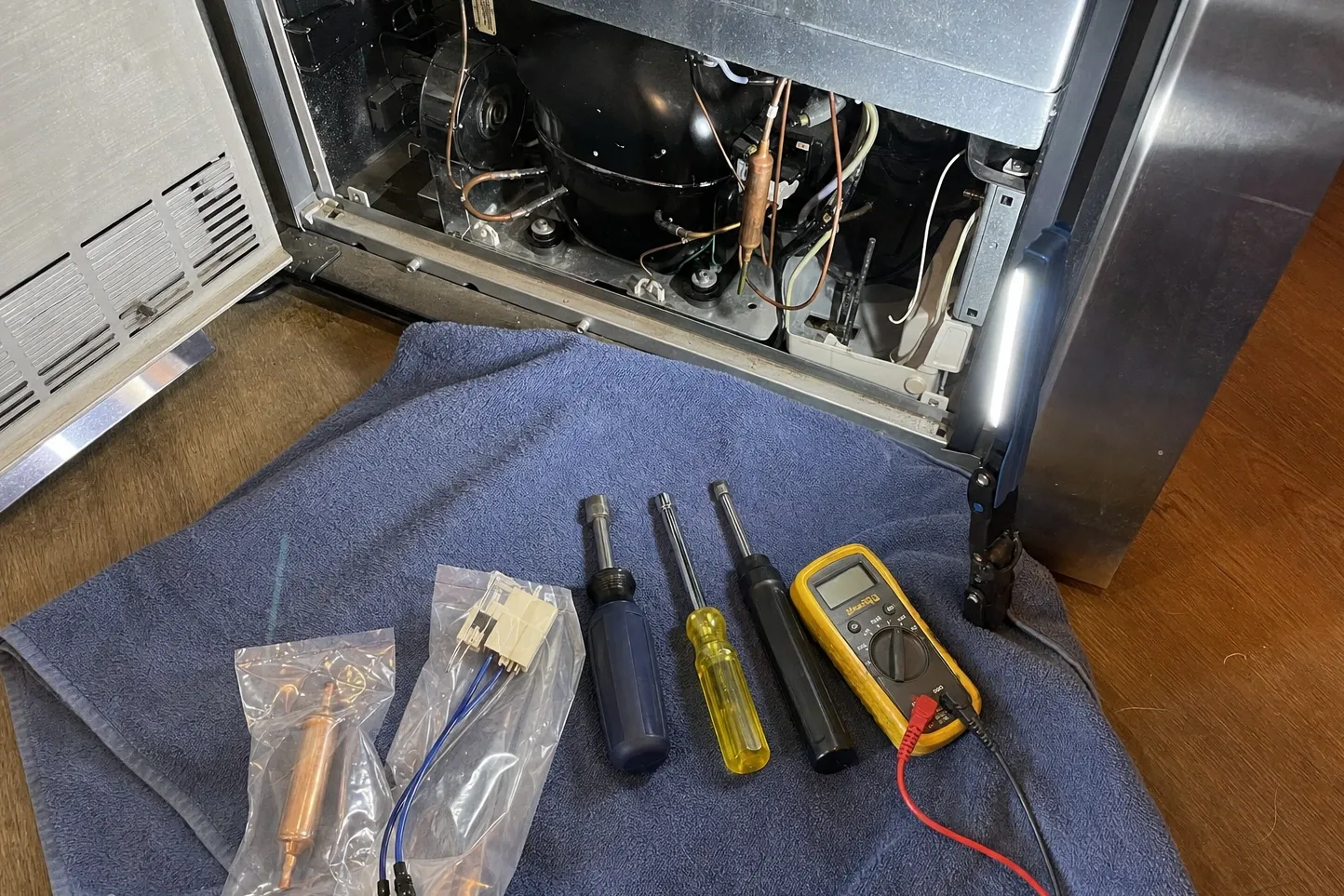
When the compartment is cold, the shut-off is open, the bin is level, the arm is down and the filter has been changed properly, what remains is the part of the chain nobody can inspect from a kitchen: the inlet valve, the fill tube, the module’s own switching, and the difference between the temperature the panel claims and the one a thermometer finds. Those are readings, not opinions.
That is what the $89 buys — somebody in front of the cabinet with instruments, working the chain from the wall inward, and the figure comes off the bill once a repair is approved. One call settles which link it is.
Follow-ups
- How long should I wait before deciding the ice maker has failed?
- A full day. Sub-Zero asks for twenty-four hours after a unit is switched on before ice production is judged, and that same wait applies after you reseat a filter, drop the setting or free a jammed cube. Judging it an hour later tells you nothing useful.
- The cubes are coming out small and hollow. Is that the same fault?
- It is the same chain, caught earlier. Sub-Zero names low water pressure among the reasons a module stops, and a mould that never fills properly gives thin, part-formed cubes before it gives none at all. Treat undersized ice as the warning rather than a separate complaint.
- Can I fit an extra filter on the supply line to improve the ice?
- Sub-Zero neither supports nor sells in-line filters, and any filter fitted upstream still has to leave the pressure the unit was designed around. If you want one, have a plumber confirm the supply first. Sub-Zero Appliance Repair Los Angeles can tell you what the module is actually seeing on (310) 496-7399.
- Nothing is jammed and the arm is down. What comes next?
- The parts of the chain you cannot see: the inlet valve, the fill tube, and the temperature the compartment is truly holding rather than the figure on the panel. Each of those is measured rather than guessed, which is what the diagnosis on a service call is for.